Spinal osteochondrosis was first described by a German,
Doctor Scheuermann, in 1920. He called it juvenile kyphosis because it
was characterised by a rounded back in teenagers. It was subsequently called
osteochondritis because it was thought to be inflammatory in nature, but
this was proved wrong and the name is now osteochondrosis (osteo - bone,
chondo - cartilage, and osis - degeneration). Although we do not know the
exact cause of the spinal disorder we do know that it leads to a disturbed
pattern of growth commencing just prior to puberty; that the shape of the
vertebrae becomes distorted leading to a wedge shaped vertebral body which
in turn gives rise to the rounded back (kyphosis). If wedging occurs on
one side the effect is to cause a curvature of the spine (scoliosis). The
faulty growth involves the cartilage from which the bone grows and the
cartilage of the intervertebral disc becomes distorted too . . . the affected
segments remain stiff and vulnerable for the rest of the individual's life.
Despite this statement the condition is not a disease in the pathological
sense and it does not shorten life but such spines are more easily damaged
by mechanical forces and they undergo degenerative changes at an earlier
age than normal spines do.
(Dr Alan Stoddard, Talk Back, National Back Pain Association, January
1985, p3)
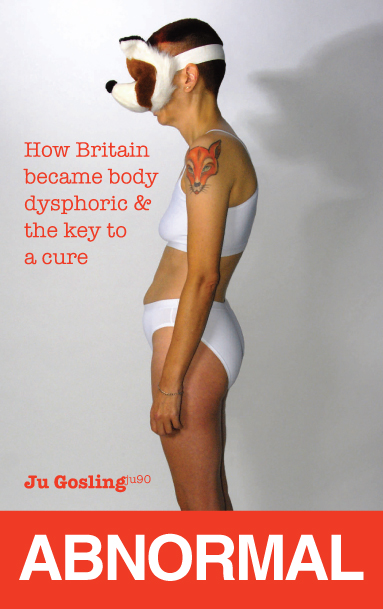
| Dr Ju Gosling aka ju90's ABNORMAL: How Britain became body dysphoric and the key to a cure is available now for just £3.09 for the Kindle or in a limited-edition hardback with full-colour art plates for £20 inc UK postage and packing. | |